Podcasting
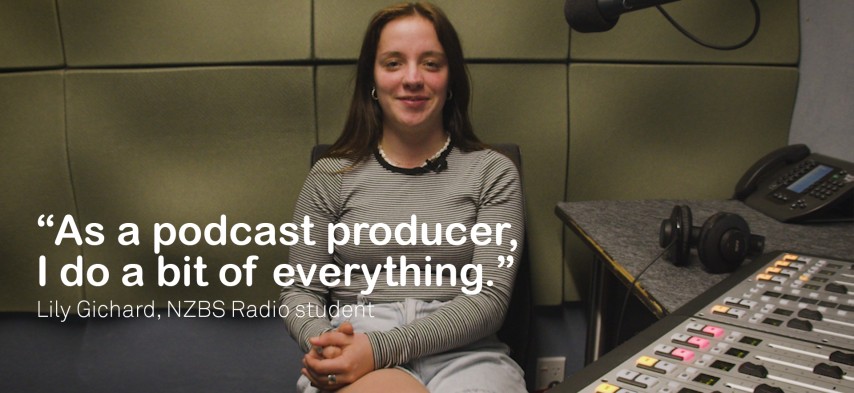
Watch Lily, NZBS Radio student, talk about what goes on behind the scenes in the making of a podcast, a media format that is growing in influence globally as a broadcast platform.
Podcasting is a growing and influential media form. It is a mode of delivery rather than taking a specific form. It could be a long audio documentary, a fictional story or fact-based true crime series. Podcasts come in the form of lifestyle magazines, panel discussions, news programmes….the opportunities of content type and style are endless.
What makes it a podcast is that the content is distributed to the audience through the internet, available on demand and listened to wherever and whenever the audience chooses. With the rise of smartphones and streaming platforms, podcasts have become a key player in the evolving world of media, complementing other forms of content like traditional radio and television broadcasts, blogs, and social media.
A podcast producer is responsible for overseeing the creation, production, and delivery of a podcast. This role encompasses a variety of tasks that ensure the podcast sounds professional, engages listeners, and aligns with the show's goals. The producer works behind the scenes to plan episodes, coordinate with hosts and guests, manage the technical aspects of recording, and edit the final product. They may also be involved in writing scripts, conducting research, booking guests, and handling the distribution of episodes across platforms. The podcast producer's work is essential for creating a polished, high-quality podcast that resonates with its audience.
As a broadcasting student, becoming familiar with the responsibilities of a podcast producer can help you hone several key skills. First, you'll develop proficiency in audio editing and post-production, which involves cutting, mixing, and enhancing sound to produce a clean and engaging final product. You'll also learn how to manage the flow of content, ensuring that each episode is structured, well-paced, and aligned with the overall vision of the show. Additionally, podcast production requires strong organisational and communication skills, as you'll need to coordinate with various team members, such as hosts, guests, sound engineers, and marketers.
As a broadcaster, you'll also gain knowledge in storytelling techniques, helping you craft compelling narratives that captivate audiences. Finally, you'll become adept at using various digital tools and software, such as audio editing programs, recording equipment, and podcast hosting platforms, which are all crucial in the modern broadcasting landscape. Through these skills, you'll be prepared to not only produce podcasts but also understand the intricacies of audio storytelling and content creation.